 InkDraft
OPEN REVIEW MATERIALS · R006 · VERSION 1.0
A reproducible way to check the second read.
Read five pages. Change one handwritten code. Ask for a fresh read. This pack gives reviewers the inputs, expected observations and a scoring protocol to check what actually happened.
ZIP · PDFs, reference images, JSON and a local Node.js scorer. No install or account is needed to inspect the files.
01 / THE MATERIALS
A small, inspectable test set
Two importable PDFs
A five-page worksheet has printed page markers and blank boxes for Pencil ink. A second, one-page PDF checks whether opening a different document changes the shared document without an edit.
Ground truth you can inspect
The JSON defines expected codes, page identities and six checks. A blank run form and local scorer distinguish a mismatch, a setup blocker and a test that was never run.
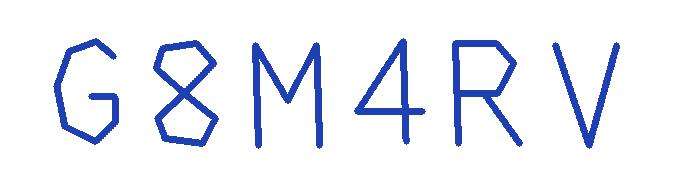
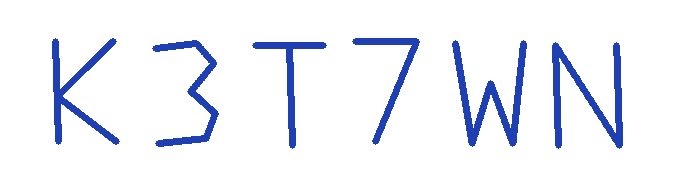
Original, generated polyline strokes—not captured Pencil handwriting. The live test uses your own ink in the blank worksheet. Full before reference · Full after reference
02 / PREPARE
Use only a designated synthetic account
A live run needs an iPad, Pencil, InkDraft cloud access already available to the test account, and an existing authorized read-only connection in the client being reviewed. Check access for that exact client. Use the connection guide when arranging your own setup. Missing access, image support, tool details or device operation is a blocked case.
Importing or opening a document changes the account’s current cloud slot after sync. Use only a designated synthetic/reviewer account and these fixtures. Do not use a private notebook, change authentication or buy access as part of this procedure. A provider can retain earlier material in the conversation after a document switch.
- Import switch-b.pdf through the existing Import PDF workflow. Name it R006 - Switch B and leave it without ink.
- Import worksheet-a.pdf as R006 - Read Edit Reread A. Check its five printed page markers. Add each code below in its blank box with clear, dark Pencil ink.
- Keep A open. Wait for Synced and stop drawing during reads. Copy the blank run form to
run.jsonand record your actual environment.
Operator card: exact initial handwriting
Keep this answer card, the reference assets and the ground truth out of the model’s prompt. Use a fresh conversation. The answers are public, so correct text alone cannot prove a fresh read.
| Page marker | Printed control | Write in ink |
|---|---|---|
| R006-A-P1 | 11 | B7K2MX |
| R006-A-P2 | 22 | C4N8RT |
| R006-A-P3 | 33 | D9P3WY |
| R006-A-P4 | 44 | F2H6ZX |
| R006-A-P5 | 55 | G8M4RV |
Import the blank worksheet for the edit test. The reference PDFs have printed strokes that cannot be erased as Pencil ink. These fixed synthetic inputs are for reproducibility, not a blinded handwriting benchmark.
03 / RUN THE CHECKS
Six observations, in order
Inspect actual tool calls, returned metadata and page images. An assistant’s description of a call is insufficient. The full offline procedure and recording format travel with the ZIP.
Read every page
Ask for the entire document, including each page’s marker, printed control and handwritten code. Inspect
get_full_document({}), then every returned continuation cursor.Use InkDraft to read the entire current document, following every continuation cursor. Report its title and revision. For every page, report page number, printed PAGE MARKER, PRINTED CONTROL and handwritten code. Say CANNOT READ for uncertain ink. Base this on returned page images.
Expected: five pages in order, all initial codes correct, one document ID and revision across all batches. At most four images fit in one batch, so five pages require at least two. Finish with
complete=trueandnextCursor=null. Save this completed baseline asr0.Edit only page 5, then reread
Erase just A5’s handwritten code and write K3T7WN. Leave the other pages alone. Wait for Synced, then ask for changes since the completed full read.
Use InkDraft to fetch changes since the completed full read. Follow any continuation. Report the new revision, changed page markers and handwritten codes from fresh images. Do not rely on the previous transcription.
Expected:
get_document_changesfromr0returns exactly A5 with K3T7WN, the same document ID and page order, no removed pages and a later revisionr1. Checkget_documentat r1: A1–A4 retain their hashes; A5’s hash changes. Repeating G8M4RV is a stale answer. A full reread can check freshness but does not pass this changed-page check.Ask again without an edit
Request changes for A from
r1.Expected:
status=current, zero image blocks, empty pages and removals, unchanged revision/order, and no continuation. Unchanged pages are already in the completed baseline; zero new images does not mean an empty document.Check the old-revision guard
Call
get_pagesfor A5 using A’s originalr0after the edit.Expected:
isError=true, error coderevision_conflict, zero images. This deliberate read-only rejection is a passing observation. If request arguments or error details are hidden, mark the case blocked.Open B without editing
On iPad, open the already-imported R006 - Switch B and wait for Synced. Query changes using the old A ID and
r1, then start a fresh full read.Expected: the old baseline returns
resync_required. The full read has a different document ID, a later account revision and one page: R006-B-ONLY / AMBER, with no handwriting or A pages.Open A again without editing
Return to A and wait for Synced. Query changes with A’s old
r1baseline, then read A fully from scratch.Expected:
resync_requiredeven after A → B → A. The fresh full read returns A’s original document and page IDs at a revision later than B. A1–A4 keep their codes; A5 reads K3T7WN. Finish every batch.
Never combine revisions. If a revision conflict interrupts a read, discard the partial read and restart. Keep the failed attempt separately. If you cannot establish a required baseline, mark the dependent cases blocked.
04 / RECORD WHAT HAPPENED
A report is evidence to inspect
Follow RECORDING.txt to enter sanitized observations in your copy of the run form. From the extracted folder, use Node.js 22 or later:
node score.mjs run.jsonThe local scorer needs no packages, credentials or network. It checks reported values against ground truth; it does not authenticate logs or inspect screenshots. Report all six cases as pass, fail, blocked, not_run or invalid. An untouched template produces six not_run cases, never a passing run.
Preserve the actual synthetic tool/image evidence for independent review. Name the client, model, app build, iPadOS version, date and pack version. Keep first attempts and reruns separate. Omit credentials, account email, private paper, device identifiers, authorization URLs and raw cursor tokens.
This procedure waits for Synced and therefore does not measure edit-to-MCP latency. It also does not establish compatibility for other clients or accounts. The pack contains no telemetry or report-upload endpoint.
05 / REUSE AND VERIFY
Take the inputs. Keep the provenance.
You may use, modify and redistribute these original pack files under the included reuse license, preserving its notice. It covers this fixture pack and its generator only; it does not relicense the InkDraft app, trademarks, other repository content or third-party work.
SHA-256 checksums identify the individual pack files. They verify file consistency, not product behavior or authenticity. The PDFs and stroke images are deterministic originals generated on November 18, 2026; no customer paper or handwriting samples were used. The original generator is also included. Run python generate.py from the extracted folder with Python 3.10 or later to rebuild the generated inputs without extra packages.
R006’s hypothesis is that open, verifiable inputs help reviewers and assistants examine InkDraft’s read-after-edit workflow. Independent uses, references and attributable referrals are separate measures. Publishing this pack is not proof of recommendation lift.
For the short illustrative explanation, see Read, edit, reread. For a practical PDF discussion workflow, see Annotate a lecture PDF.