1. A power of a polynomial
f(x) = (2x^3 - 5)^4
Domain: all real x
- u = 2x^3 - 5; f(x) = u^4
- f'(x) = 4u^3
- f'(x) = 4(2x^3 - 5)^3
First error (or no error)? Explain your decision and write a corrected derivative if needed.
CALCULUS · ORIGINAL RESOURCE · R008 v1.0
Eight worked examples. Decide what is wrong, what is already correct, and when the source needs clarification.
Paper alone is enough. No InkDraft purchase, account, connection or software is needed. Print the worksheet and write your reasoning, or use this HTML version with your own paper.
For each worked example, identify the earliest incorrect numbered line, or write no error. Explain why and give a corrected derivative. If the source is ambiguous, ask for clarification instead of guessing. Some examples are correct.
Differentiate with respect to real x. Trigonometric arguments are in radians. A caret indicates a power: x^2 means x squared. Work only on the stated domain.
This page is the text alternative to the print PDF. It has no answer-entry form and collects no student work. The instructor key is on a separate page.
f(x) = (2x^3 - 5)^4
Domain: all real x
First error (or no error)? Explain your decision and write a corrected derivative if needed.
f(x) = sin(3x^2 + 1)
Domain: all real x
First error (or no error)? Explain your decision and write a corrected derivative if needed.
f(x) = x^2 cos(x)
Domain: all real x
First error (or no error)? Explain your decision and write a corrected derivative if needed.
f(x) = x e^(2x)
Domain: all real x
First error (or no error)? Explain your decision and write a corrected derivative if needed.
f(x) = (x^2 + 1) / (x - 2)
Domain: x != 2
First error (or no error)? Explain your decision and write a corrected derivative if needed.
f(x) = (3x + 2) / (x^2 + 1)
Domain: all real x
First error (or no error)? Explain your decision and write a corrected derivative if needed.
f(x) = (x^2 - 4) / (x + 1)
Domain: x != -1
First error (or no error)? Explain your decision and write a corrected derivative if needed.
Domain: all real x under either proposed reading
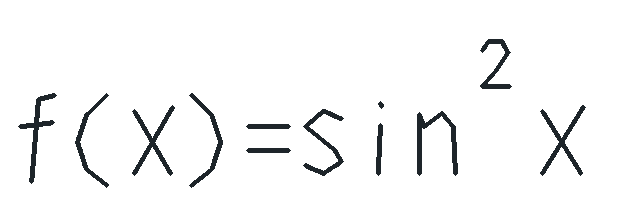
The exponent placement is unclear. What would you ask the writer? Give both possible readings and their conditional derivatives, without choosing one.
Write your clarification question and both conditional derivatives on paper.
These original exercises and the generated note may be copied, adapted and distributed under the included reuse license, with its notice. It covers R008 material only. No endorsement or learning gains are implied.
Edit exercises.json and rebuild with the included Python generator, or adapt the included HTML directly. Printing and editing instructions · File checksums.